I have sat across the table from investors, lenders, and acquirers more times than I can count.
From both sides.
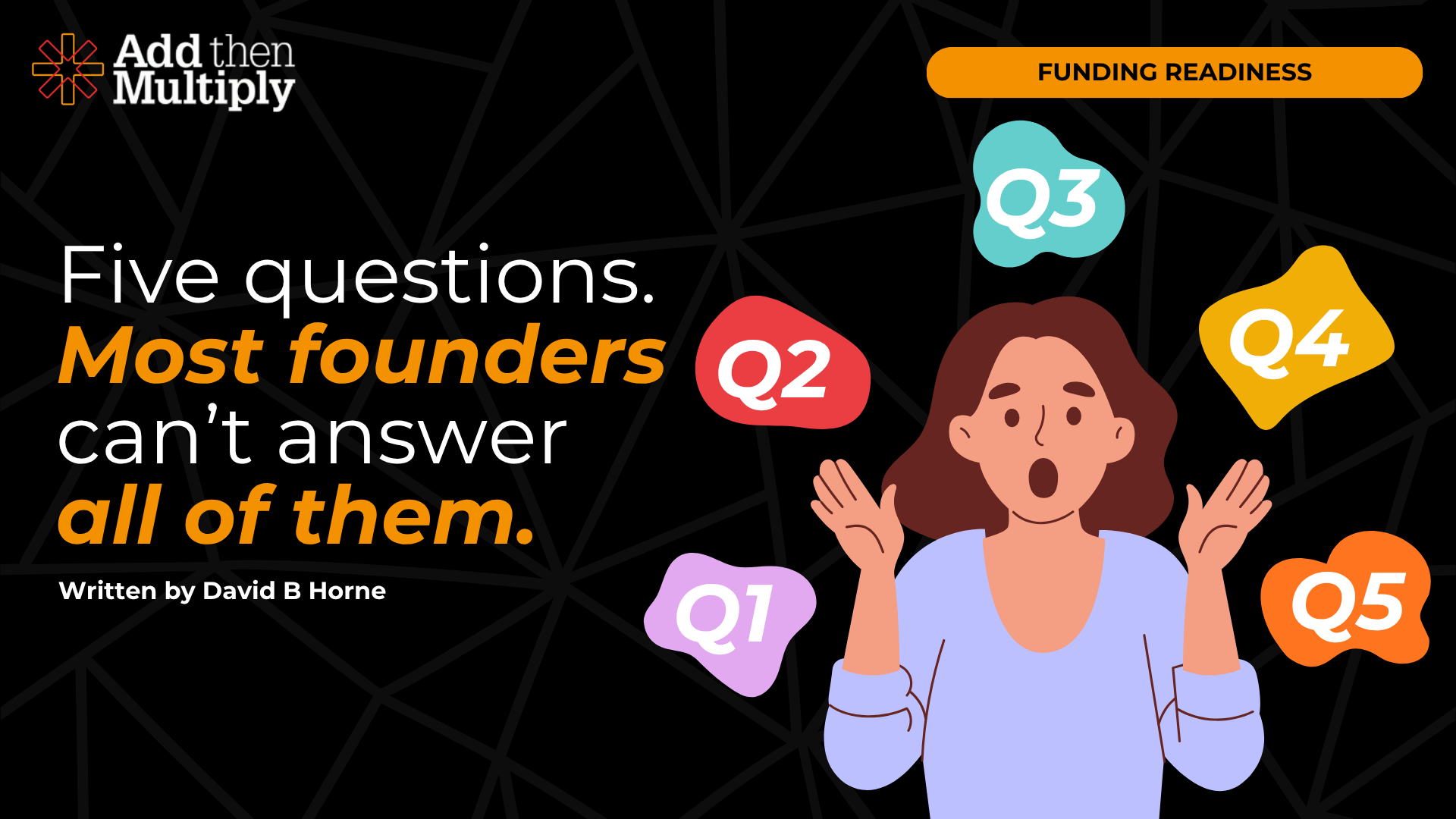
And in forty years of doing this, I have noticed that the questions are almost always the same. Not the exact wording. But the substance. The five things every serious investor needs to understand before they commit.
Most founders know these questions are coming.
Most founders are still not ready to answer them.
The questions don’t change. The answers do.
One. Can this business survive without you?
This is the question underneath every other question. It is the first thing an investor, lender, or acquirer is really asking when they look at your business. Not whether the product is strong. Not whether the market is large. Whether the value they are buying walks out of the door with you when the meeting is over.
If the honest answer is no, everything else in the conversation becomes harder.
Two. What does the business actually earn?
Not revenue. Earnings. Gross margin by product line or service. Contribution by client or channel. EBITDA. The difference between what the business takes in and what it costs to run it. Most founders know their top line. Far fewer know their margin with precision.
Three. Where is the cash going?
A profitable business can still run out of cash. An investor or lender needs to see that you understand your cash position, your working capital cycle, and your runway in different scenarios. Not roughly. Precisely. And quickly.
Four. What does growth cost?
If the business is given the capital being discussed, what happens? Not in aspiration. In numbers. What does the model say? What assumptions are being made? What does the return on that capital look like in twelve, twenty-four, and thirty-six months? This is the question most founders answer with a narrative when what is needed is a financial model.
Five. What is the exit?
Even if exit is years away, every investor wants to know how they get their money back. Trade sale. IPO. Management buyout. The answer shapes how they think about the risk they are taking today. Founders who haven’t thought about this yet, and many haven’t, signal that to the room immediately.

The preparation most founders skip.
Add Then Multiply has a full chapter on what preparation actually looks like and what it takes to walk into the room ready.
Three founders. Three versions of the same stumble.
A clinical business with serious investor interest. The meeting goes well until question two. Gross margin by service line. The answer takes three days to produce. The investor doesn’t walk away. But the terms they come back with reflect exactly the uncertainty that three-day delay created.
Multiple income streams, real brand recognition, a genuine growth story. Question three stops them. Cash runway under different scenarios. The model exists. But it was built for internal use, not investor scrutiny. The investor asks one clarifying question and the model doesn’t hold up. The conversation changes.
Genuine traction, a compelling vision. They get to question four without a financial model that shows the investor what their capital will do. They have a deck. They have a narrative. They don’t have numbers. The investor has seen a hundred decks. They haven’t seen enough numbers.
Three very different businesses. The same pattern.
They came prepared to tell the story. They weren’t prepared to prove it.
What being prepared actually looks like
I have led due diligence processes from both sides of the table. And the founders who come through them fastest and cleanest are not always the ones with the strongest businesses.
They are the ones who can answer all five questions before they are asked.
They know exactly what the business is worth, what it earns, where the cash goes, and what happens when capital is deployed. They have a financial model that has been stress-tested. Their reporting is clean enough that due diligence feels like a formality rather than an interrogation.
And when the hard questions come, the answers take minutes. Not days.

Not sure where your business actually stands before a funder asks?
The Funding-Ready Scorecard tells you exactly where the gaps are, in under a minute.
The preparation most founders skip
The five questions above are not a surprise. Every founder who has ever raised capital knows they are coming.
The problem is that preparation takes time. The right financial infrastructure doesn’t appear overnight. A robust financial model takes weeks to build properly. Clean, investor-grade reporting requires systems that most founder-led businesses between £1m and £10m don’t yet have in place.
And most founders start the preparation too late. They begin when the investor is already interested, when the pressure is on and the clock is running.
My answer is always the same: start at least twelve months before you think you need it.
Build the model before you need to show it. Clean the reporting before anyone asks for it. Know your gross margin before someone asks you to prove it.
That is not pessimism. That is the difference between raising on the terms your business deserves and raising on the terms your preparation allows.
Know your numbers. Build your foundations. Then add. Then multiply.
Before the meeting is too late.
The founders who raise on the best terms don’t walk into those conversations hoping for the best. They prepare.
Here’s where to start.
📖 Get your copy of Add Then Multiply, and ready what funding-ready actually looks like and what it takes to raise on the right terms.
⚡ With our Funding Scorecard, find out exactly where you stand before a funder, lender, or acquirer does it for you.
✉️ Our weekly newsletter, The Multiplier Effect lands every Wednesday with practical thinking on funding, scaling, and building a business worth owning.
David B Horne

Founder of Add Then Multiply & Funding Focus
Add Then Multiply is a fractional finance and business scaling consultancy helping founder-led businesses at £1M–£10M+ to Fund, Acquire, Consolidate, and Exit.