When did you last think seriously about selling your business?
If the honest answer is “not really” or “someday,” you’re in good company. Most founders put exit planning somewhere between getting round to it and never.
It feels distant, uncomfortable, or simply premature.
Here’s the problem with that.
The founders who achieve the best exits don’t start planning when they’re ready to leave. They start years before. They build the business for exit from the inside out. And by the time a buyer arrives at the table, they’ve already done the work that makes the difference between a life-changing sum and a disappointing one.
After thirty-odd M&A transactions and twenty years helping founders raise capital, acquire businesses, and exit well, I’ve sat on both sides of that table more times than I can count.
What follows is what I wish more founders knew before they needed to.
Every decision today affects your exit valuation.
The first thing to understand is that exit planning is not a conversation you have when you’re tired of the business or ready to move on.
It is a way of building a business.
Every decision you make today, about your financial reporting, your management team, your systems, your contracts, your recurring revenue, is either adding to or subtracting from your exit valuation.
Most founders don’t see it that way. They see the business as something they run. I want you to see it as something you’re building to hand over, even if you never plan to.
That shift in perspective changes everything.

Most founders leave money on the table at exit.
Add Then Multiply walks through exactly what that preparation looks like, including a full chapter on exit, with real deals, real numbers, and the lessons that only come from sitting on both sides of the table.
📖 Available now as an eBook or physical edition.
What a buyer actually looks at.
I’ve led due diligence processes from both sides. Here is what buyers and acquirers are really asking when they look at your business.
Can this business survive without its founder?
That is the question underneath every other question. If the answer is no, your valuation suffers. If the answer is yes, you’re in a very different conversation.
Beyond that, they want clean financials. Month-end reporting that arrives on time and tells the truth. Unit economics that hold up under scrutiny. A cash position that’s understood and managed, not guessed at. Contracts that are transferable. A management team that is capable of running the business through a transition.
The businesses that get passed over in an exit process are not always the weakest businesses. They are often genuinely strong businesses with genuinely weak financial infrastructure. They lose not because of what they’ve built, but because of how they’ve documented and reported it.
One of the most satisfying moments in my career came when the CFO of a buyer told me our due diligence was the cleanest he had ever experienced. That didn’t happen by accident. It happened because we had spent years building the business to that standard.
The five routes most founders overlook
There is no single definition of a good exit.
The right route depends on your business, your ambitions, your team, and your timing.
A trade sale, selling to a competitor or a strategic buyer in your market, is the most common route for founder-led businesses. Done well, it can deliver an exceptional outcome. Done without preparation, it can leave significant value on the table.
A management buyout gives your existing team the opportunity to buy the business from you. It can be cleaner in terms of cultural continuity, but the financing structure needs to work for everyone involved.
Passing the business to the next generation can be enormously rewarding, but it introduces complexity that is often underestimated, particularly around governance, shareholding, and whether the next generation actually wants it.
An IPO on a public market, as I know well from my time as a listed company CFO, is a different process entirely. It demands an entirely different level of financial discipline, reporting, and governance.
And liquidation, while sometimes the only available option, is almost always the least valuable route.
The point is this: your route to exit should be chosen deliberately, long before you need it, not by default when the time runs out.

Do you know where your business actually stands?
The Growth Readiness Assessment takes you through exactly where you are today across funding, acquisition, consolidation, and exit readiness, so you’re never caught off guard.
⚡ Find out in less than 3 minutes.
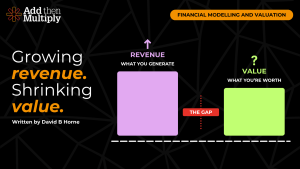
The valuation gap most founders don’t see coming
Here is something I tell every founder who is thinking about exit.
Your business is probably worth more than you think it is.
And it’s almost certainly worth less than it could be.
That gap, between what it’s worth today and what it could be worth with the right preparation, is where the real work happens. I’ve seen that gap close by fifteen, twenty, sometimes fifty percent, not by changing the business fundamentally, but by cleaning up its financials, strengthening its management, reducing founder dependency, and documenting what already exists.
In one exit I led, a clean due diligence process and a structured negotiation added fifteen percent to the buyer’s original offer. That was not a small number.
That was life-changing money for the founders involved.
The founders who get there don’t do it by luck. They do it by starting the preparation early enough to make it count.
When should you actually start?
My answer is always the same: three years before you think you need to.
That isn’t an arbitrary number. It’s the minimum time needed to make meaningful changes to your financial infrastructure, reduce founder dependency in a way that a buyer will believe, and position the business properly for the market you’re selling into.
If you’re planning to exit in five years, start now. If you’re planning to exit in ten years, start now. If you have no plan at all, the best time to start is still now.
The mantra I return to again and again is this: prepare, prepare, prepare.
Not because the exit itself is complicated, though it can be. But because the preparation is where the value is created. By the time a buyer is in the room, it’s too late to build what you should have built two years earlier.

The thinking behind this blog doesn’t stop here.
Every fortnight, The Multiplier Effect brings you practical insight on funding, scaling, and building a business that’s worth owning, and eventually worth selling. Just the stuff that actually moves the needle.
📖 Join the list and receive weekly insights.
The three questions worth asking yourself today
If you do nothing else after reading this, sit with these three questions.
- If you had to sell your business in six months, would your financial reporting be in a state you’d be confident showing to a buyer?
- If you stepped back from the business tomorrow, would it continue to operate and grow without you?
- Do you actually know what your business is worth right now, and what would need to change to increase that number?
If any of those answers make you uncomfortable, that’s not a problem. That’s information.
And it’s the kind of information that, with the right support, is entirely fixable.
Ready to find out where your business actually stands?
Most founders don’t know the honest answer until someone is already in the room asking the hard questions.
The Growth Readiness Assessment takes you through exactly where your business stands today, across funding, acquisition, consolidation, and exit readiness, before any of those conversations happen.
If this resonated, the starting point is the same as it always is.
Know your numbers. Build your foundations. Then add. Then multiply.
Before you go
📖 Get your copy of Add Then Multiply, the full FACE methodology with real stories and real numbers from founders who’ve scaled.
✉️ Our weekly newsletter, The Multiplier Effect lands every Wednesday. Practical thinking on funding, scaling, and building a business worth owning.
David B Horne

Founder of Add Then Multiply & Funding Focus
Add Then Multiply is a fractional finance and business scaling consultancy helping founder-led businesses at £1M–£10M+ to Fund, Acquire, Consolidate, and Exit.